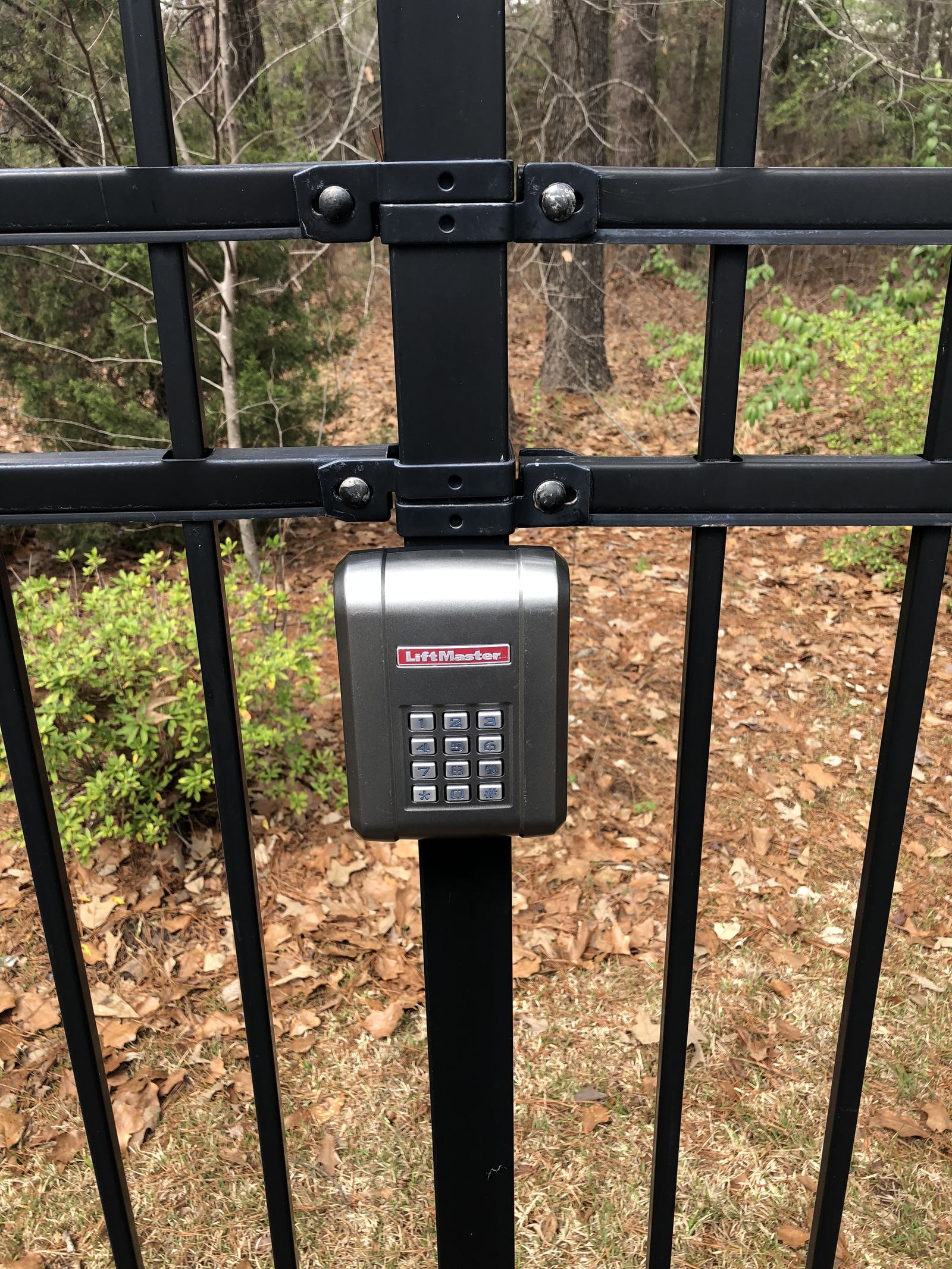
Standard Wireless Keypad
LiftMaster wireless keypad on a concrete-set gooseneck — backlit codes, truck-friendly height, and optional free-exit so you don’t type a code to leave.

Simple code entry that actually gets used
Most driveways don’t need a full intercom stack on day one. A solid wireless keypad on a gooseneck — set in concrete at truck height — is the reliable “type a code, gate opens” setup we install with a lot of residential and light commercial systems around Shreveport and Bossier.
LiftMaster KPW5 wireless keypad
Our usual pick is the LiftMaster KPW series (the unit in the photos). It’s wireless to the opener, so we’re not trenching keypad cable across the driveway. You get:
- Long-range wireless to the operator
- Backlit buttons you can see at night
- Multiple codes (typically five on the KPW5) for family, guests, or vendors
It’s the keypad we standardize on with most new installs unless you need a directory, cellular call box, or managed tenant credentials.
Gooseneck pedestal — done right
We mount keypads on metal posts, most often a gooseneck pedestal poured in concrete (at least one full 80 lb bag, usually more). Height is set so an SUV or pickup can reach it without climbing out into a ditch. Cheap plastic posts and “stake it in the dirt” installs fail — concrete and steel don’t.
Leaving the property: free-exit vs keypad-out
- Free-exit (most common) — A loop or sensor in the driveway detects a vehicle leaving and opens the gate automatically. You don’t type a code to get out.
- Keypad-out — A second keypad inside the property so exit also needs a code. Useful when you want tighter control both directions.
When to step up
Need resident directories, revoke-on-move-out, or phone answering? See Tenant Access Management. Want open/close alerts without changing how you enter? See Monitoring. Camera + AI entry: AI Smart Access.
Call or text (318) 286-6509 · Request a quote
Gallery
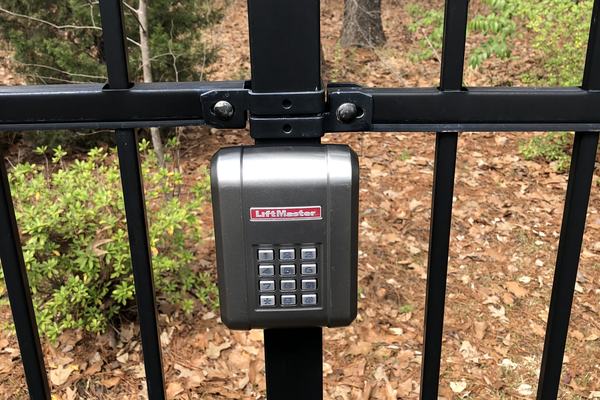
LiftMaster wireless keypad on a gooseneck — our standard residential code entry.